Geography and Location of the Korean Peninsula
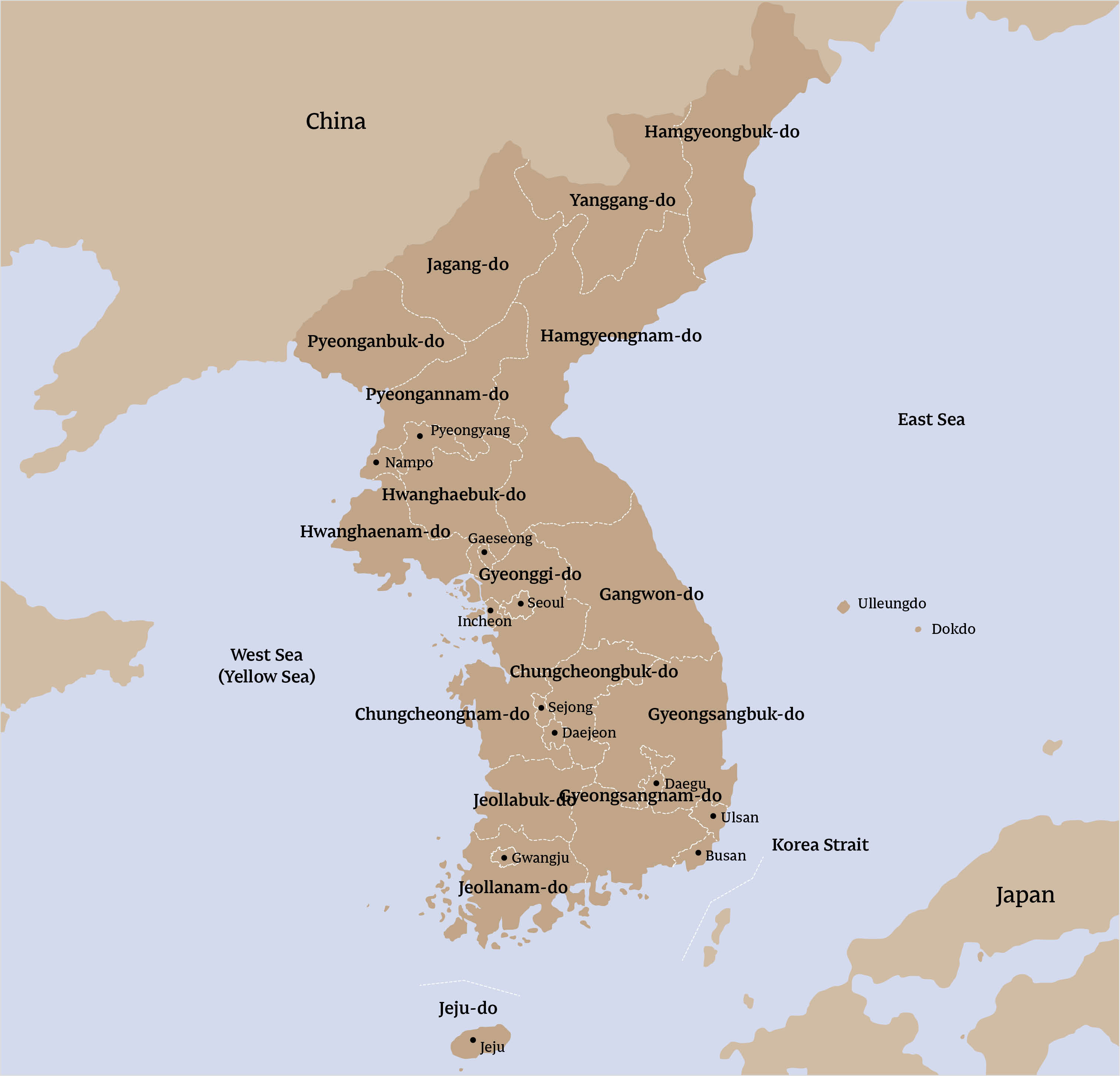
The Korean Peninsula lies between 124° and 132° East longitude, on the eastern edge of the Eurasian continent and the northwestern rim of the Pacific Ocean. It is bordered by China and Russia to the north and Japan to the south, with the Korea Strait serving as the maritime border.
The peninsula stretches roughly 1,000 kilometers (620 miles) from north to south, with an average east–west width of about 300 kilometers (185 miles). Its total area is 223,404 square kilometers (86,260 square miles), which is similar in size to the United Kingdom, Ghana, Laos, or Belarus. Of this total area, the Republic of Korea, which exercises effective jurisdiction south of the Military Demarcation Line, occupies approximately 100,459 square kilometers (38,790 square miles) as of 2025.
Approximately 75 percent of the peninsula is mountainous, making mountain views common throughout the country. Expansive flatlands are relatively scarce. The terrain slopes downward from east to west, with mountain ranges over 1,000 meters (3,280 feet) high concentrated in the northern and eastern regions. These ranges form a rugged backbone, resulting in steep coastal cliffs along the East Sea, while the western coast is flatter and more gently sloped.
With the exception of its northern land border, the peninsula is surrounded by sea on three sides, with a total coastline (including islands) measuring about 15,241 kilometers (9,470 miles). The East Sea is deep and has a relatively smooth shoreline. In contrast, the West Sea and the southern waters are shallower, characterized by complex, irregular coastlines and countless islands. Each coastline has its own distinct marine scenery and ecological features: the East Sea is deep and clear; the West Sea is home to wide tidal flats; and the southern sea is renowned for its many islands.
Administratively, Korea is composed of one Special Metropolitan City (Teukbyeol-si), six Metropolitan Cities (Gwangyeok-si), one Special Self-Governing City (Teukbyeol-jachi-si), six Provinces (do), and three Special Self-Governing Provinces (Teukbyeol-jachi-do). These divisions serve as the basic framework of national administration and regional identity and have been adjusted over time in response to social and demographic changes. As the population grew and industrialization progressed, major cities were designated as metropolitan areas. In addition, administrative restructuring has reflected local needs; for instance, Jeju was designated a Special Self-Governing Province in 2006, followed by Gangwon-do in 2023 and Jeollabuk-do in 2024.
A Land of Four Seasons
Korea has a temperate climate with four clearly defined seasons, each offering its own colors, atmosphere, and charm.
Spring and autumn are generally sunny and dry, making them ideal seasons for outdoor activities and travel. In spring, cherry blossoms and azaleas bloom in abundance. In autumn, mountains and cities alike are draped in brilliant shades of red and gold foliage. Summer is hot and humid, drawing many people to flock to streams, rivers, and beaches to escape the heat. Winter brings cold temperatures and frequent snowfall, creating ideal conditions for skiing, sledding, and other winter activities.
Temperatures vary by region, but the national annual average ranges from 7 °C to 15 °C (45 °F to 59 °F). August is the hottest month,
with averages between 25 °C and 27 °C (77 °F to 81 °F) and daytime highs often exceeding 33 °C (91 °F). January is the coldest, with average temperatures ranging from −6.9 °C to 3.6 °C (20 °F to 38 °F) and some areas dropping below −10 °C (14 °F).
Annual precipitation averages about 1,400 millimeters (55 inches), with more than half falling during the summer. From late June to late July, Korea enters its monsoon season, known as jangma, which brings heavy and often prolonged rainfall. Summer humidity levels typically range from 75 to 85 percent, while spring tends to be more moderate at 50 to 70 percent.
In recent years, subtropical climate characteristics have become more pronounced, particularly along the southern coast of Korea. As a result, tropical crops such as bananas and apple mangoes can now be cultivated, while areas suitable for growing cooler-weather crops such as rice and apples have steadily declined.
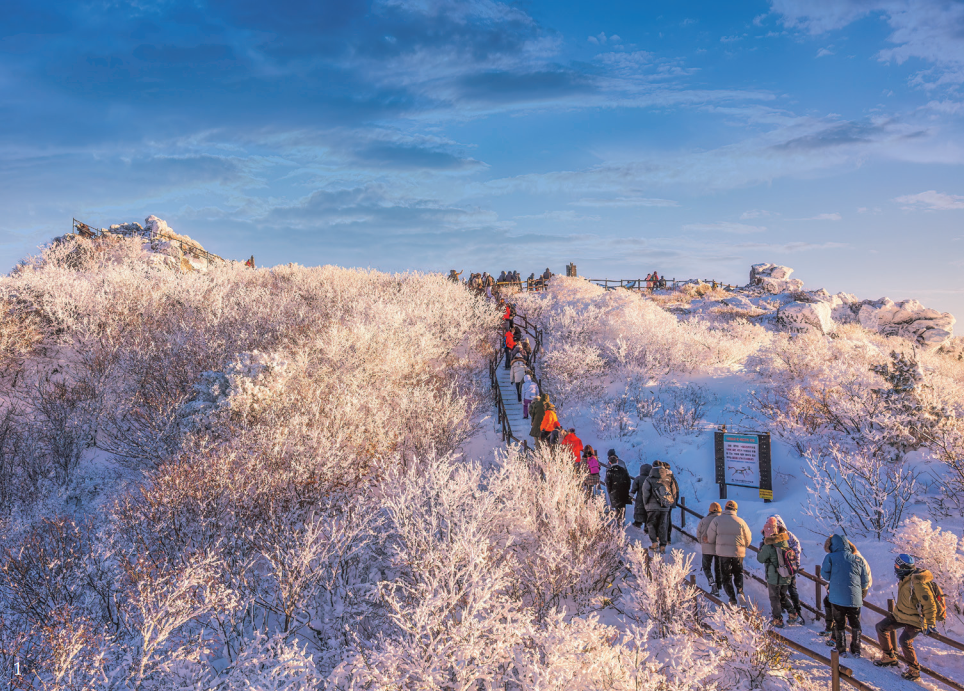
1. Winter Landscape of Deogyusan Mtn. in Muju
Renowned for its vibrant autumn foliage and snow-covered trees in winter, Deogyusan stands as Korea’s premier alpine showcase of four-season splendor.
Population in Korea: A Shifting Demographic Landscape
As of 2023, Korea’s population is approximately 51.77 million, making it the 29th most populous country in the world. The gender ratio is nearly balanced. More than half of the population is concentrated in the capital region of Seoul, Gyeonggi, and Incheon, resulting in significant population density in and around the metropolitan area. This region attracts residents with its well-developed transportation networks, abundant educational institutions, and rich cultural amenities, offering convenience in both work and daily life.
Korea ranks among the countries with the highest average life expectancy worldwide. Currently, the national average is around 84.5 years. Women live longer on average at 87.1 years, compared to 81.6 years for men. This longevity is largely attributed to advances in medical technology, improved living standards, and robust public health initiatives. As a result, Korea is listed alongside Japan and Switzerland as one of the countries with the highest life expectancy.
However, the nation’s population structure is undergoing a dramatic shift as the birth rate has declined sharply in recent years. As of 2024, the average number of children per woman was just 0.75, which is the lowest fertility rate in the world. Combined with a rapidly aging society, this trend is creating new challenges across multiple sectors, including labor, education, and social welfare.
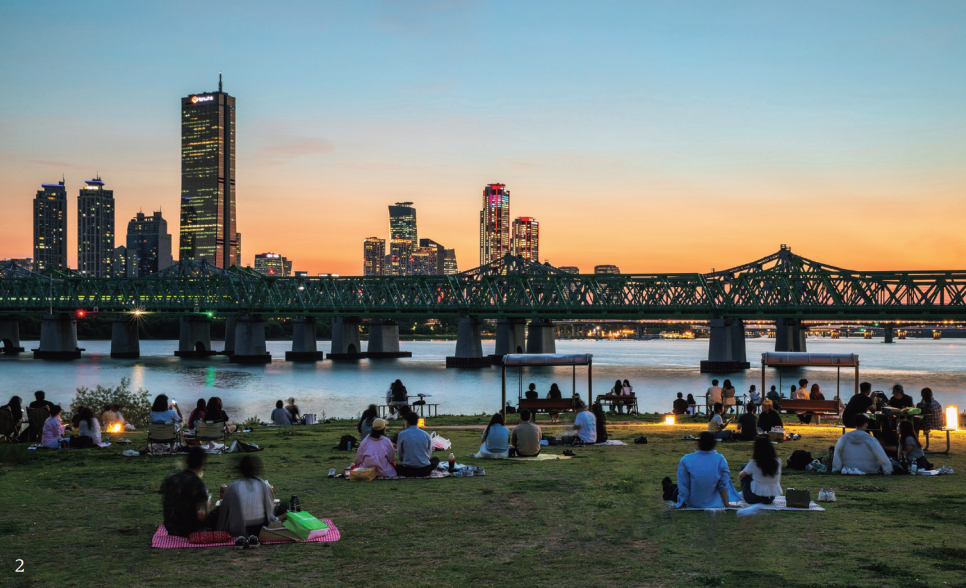
2. View of the Hangang River and Yeouido from Nodeulseom Island, Seoul
In densely populated Seoul, public spaces such as Nodeulseom Island and robust urban infrastructure are key to enhancing the quality of life of residents.
Hangeul: A Writing System Rootedin Scientific Principles
Korea uses its native language, Korean, and it is written in Hangeul, a unique script created to represent it. Korean is an agglutinative language, meaning root words are joined with grammatical elements, and grammatical relationships are conveyed through word order and particles.
Hangeul was created in 1443 by King Sejong of the Joseon dynasty to make reading and writing more accessible to the general public. It was officially promulgated in 1446, accompanied by a guide that explained its purpose and principles, titled Hunminjeongeum Haeryebon (The Explanatory Edition of the Proper Sounds for the Instruction of the People). Originally named Hunminjeongeum, Hangeul consisted of 28 letters: 17 consonants and 11 vowels. Today, 24 of those characters remain in use, comprising 14 consonants and 10 vowels.
Hangeul was designed with scientific precision to reflect the sounds of spoken Korean. Consonants such as ㄱ (g), ㄴ (n), ㅁ(m), ㅅ (s), and ㅇ (ng) were modeled after the shapes and movements of the vocal organs involved in articulation. The vowelsㆍ (ɒ), ㅡ (eu), and ㅣ (i) were based on the philosophical concepts of Heaven, Earth, and Human, respectively. These letters are grouped into syllabic blocks using a system known as moa-sseugi (syllable assembly).
Hangeul is the only known writing system in the world created by a monarch, who also authored an explanatory guide. Hunminjeongeum Haeryebon is an extraordinary record that captures the philosophical and linguistic foundations of the script’s invention. It was designated a National Treasure of Korea in 1962 and inscribed on UNESCO’s Memory of the World Register in 1997. UNESCO also honors King Sejong’s legacy through the King Sejong Literacy Prize, which is awarded to individuals and organizations that have made significant contributions to literacy around the world.
In recent years, Hangeul’s structural elegance and unique visual design have garnered international recognition. Its distinctive form has inspired creative work in fashion, design, and the arts.
Interest in the Korean language continues to rise in tandem with the global spread of Korean culture, often referred to as the Korean Wave or Hallyu. The King Sejong Institute, a worldwide network dedicated to the promotion of Korean language and culture education, had expanded to 256 locations across 88 countries by 2024. That same year, a total of 216,226 students enrolled in the Institute’s online and in-person Korean language programs, marking an increase of 20.8 percent compared to 178,973 students in 2023. Today, the King Sejong Institute has evolved beyond language education to become a global platform for cultural exchange and engagement.
In Korea, October 9 is celebrated as Hangeul Day, commemorating the invention of the script and honoring the achievements of King Sejong.
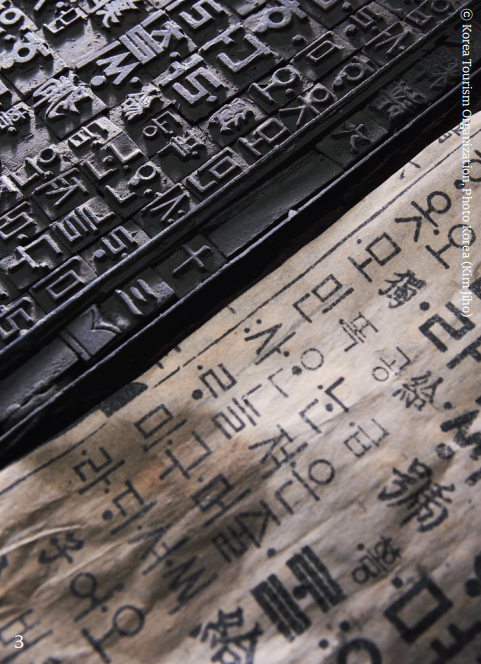
3. Hangeul Metal Type
Over 750 pieces of Hangeul metal type, produced during the Joseon era, provide valuable insight into the practical use of the script.
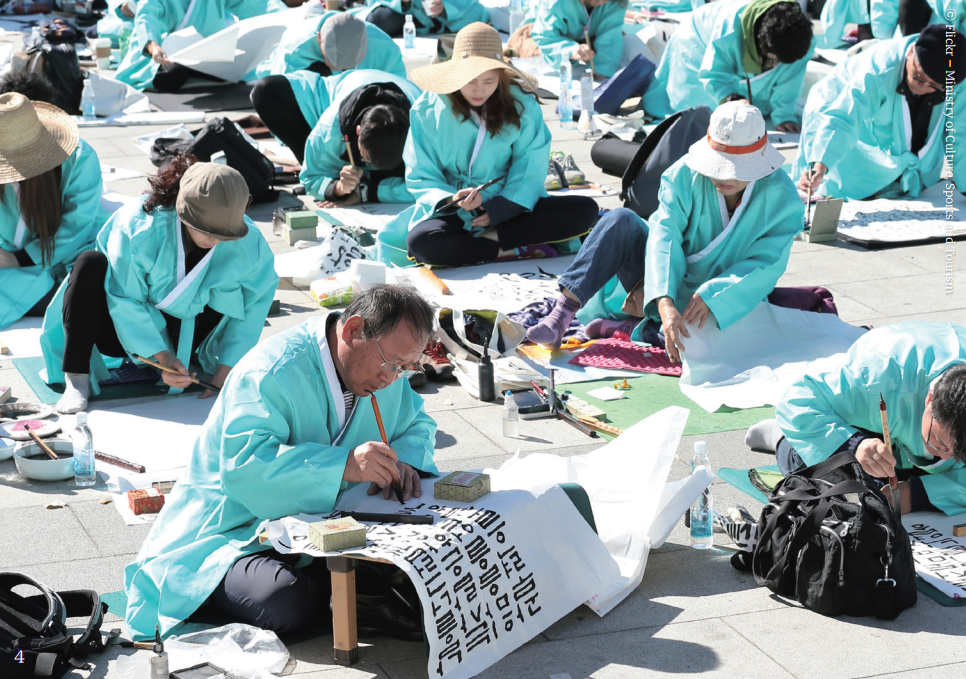
4. National Calligraphy Contest at Gwanghwamun Square
Participants concentrate on their calligraphy at the 569th Hangeul Day celebration, held on October 9 at Gwanghwamun Square in Seoul.
National Flag: The Taegeukgi, Emblem of Korea
The Taegeukgi is the national flag of the Republic of Korea. It features a white background, a central taegeuk symbol, and four trigrams (gwae) placed in each corner. The white background symbolizes brightness, purity, and peace. At the center, the red and blue taegeuk represents the harmony of yin and yang, two opposing yet complementary forces that, according to East Asian philosophy, give rise to all things in the universe. Each of the four trigrams surrounding the taegeuk represents a fundamental element of nature: geon (☰; heaven), gon (☷; earth), gam (☵; water), and ri (☲; fire).
The Taegeukgi was officially adopted as Korea’s national flag in 1883 by order of King Gojong of the Joseon dynasty. It remained in use throughout the Korean Empire and continues to be the national flag of the Republic of Korea today. In its early years, the flag appeared in various forms due to the lack of standardized guidelines. This was standardized in 1949 with the introduction of the “Flag Manufacturing Guidelines,” which unified its specifications. In 2007, the Act on the Flag of the Republic of Korea established a formal legal framework for its consistent use and management. Today, the Taegeukgi is more than a national emblem; it is a powerful symbol of Korean identity and cultural presence on the global stage.
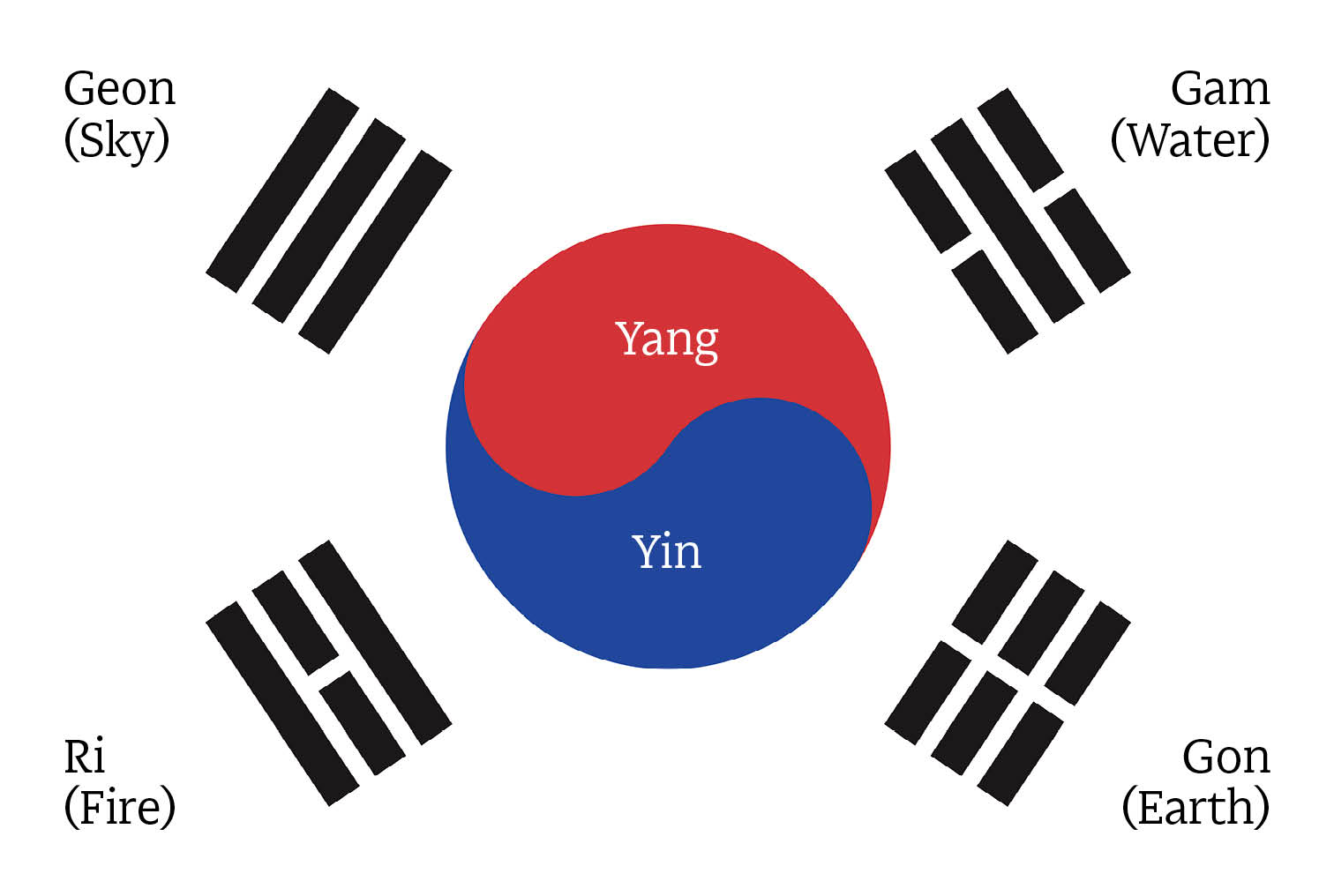
5. The Taegeukgi
A symbol of harmony between yin and yang, embodying the philosophical principles of the four trigrams.
National Flower: The Mugunghwa, Korea in Bloom
The mugunghwa (Hibiscus syriacus), also known as the Rose of Sharon, is Korea’s national flower. Its name is derived from mugung, meaning “eternal” or “unfading,” and evokes the image of a flower that “blooms eternally and never withers.” The mugunghwa embodies the spirit of perseverance and resilience that is deeply ingrained in the cultural fabric of Korea.
From early July to mid-October, it blooms daily, with each shrub producing thousands of blossoms, demonstrating its remarkable vitality. For centuries, Koreans have cherished the mugunghwa as a treasured and even celestial flower. Today, it remains a widely recognized national symbol, featured at government institutions, schools, and major public ceremonies.
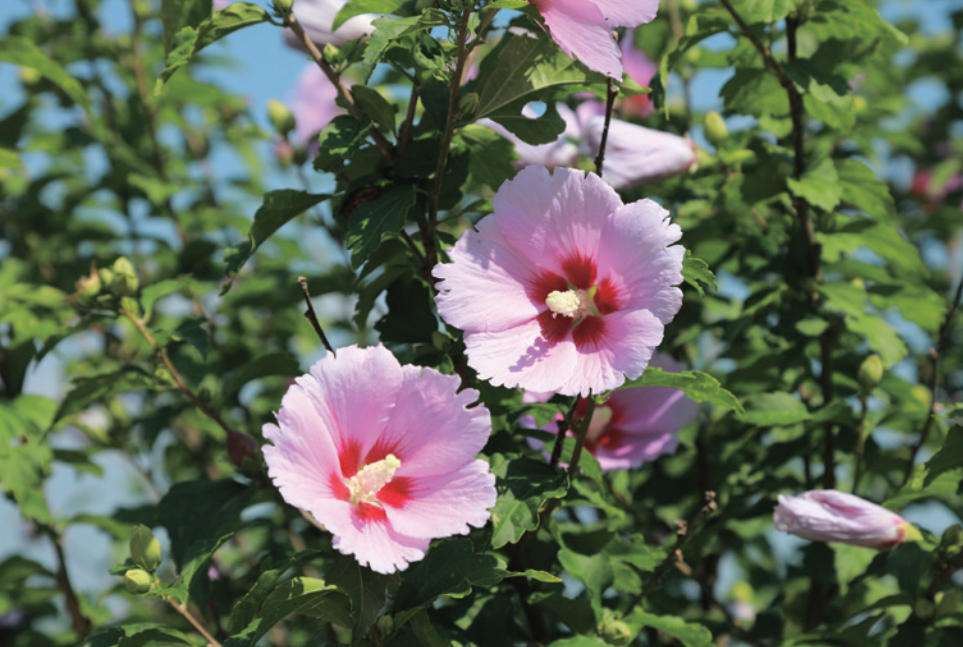
6. The Mugunghwa
Notable for its graceful yet resilient appearance, the mugunghwa captures the quiet strength and identity of the Korean people.
National Anthem: A Song of Unity, the “Aegukga”
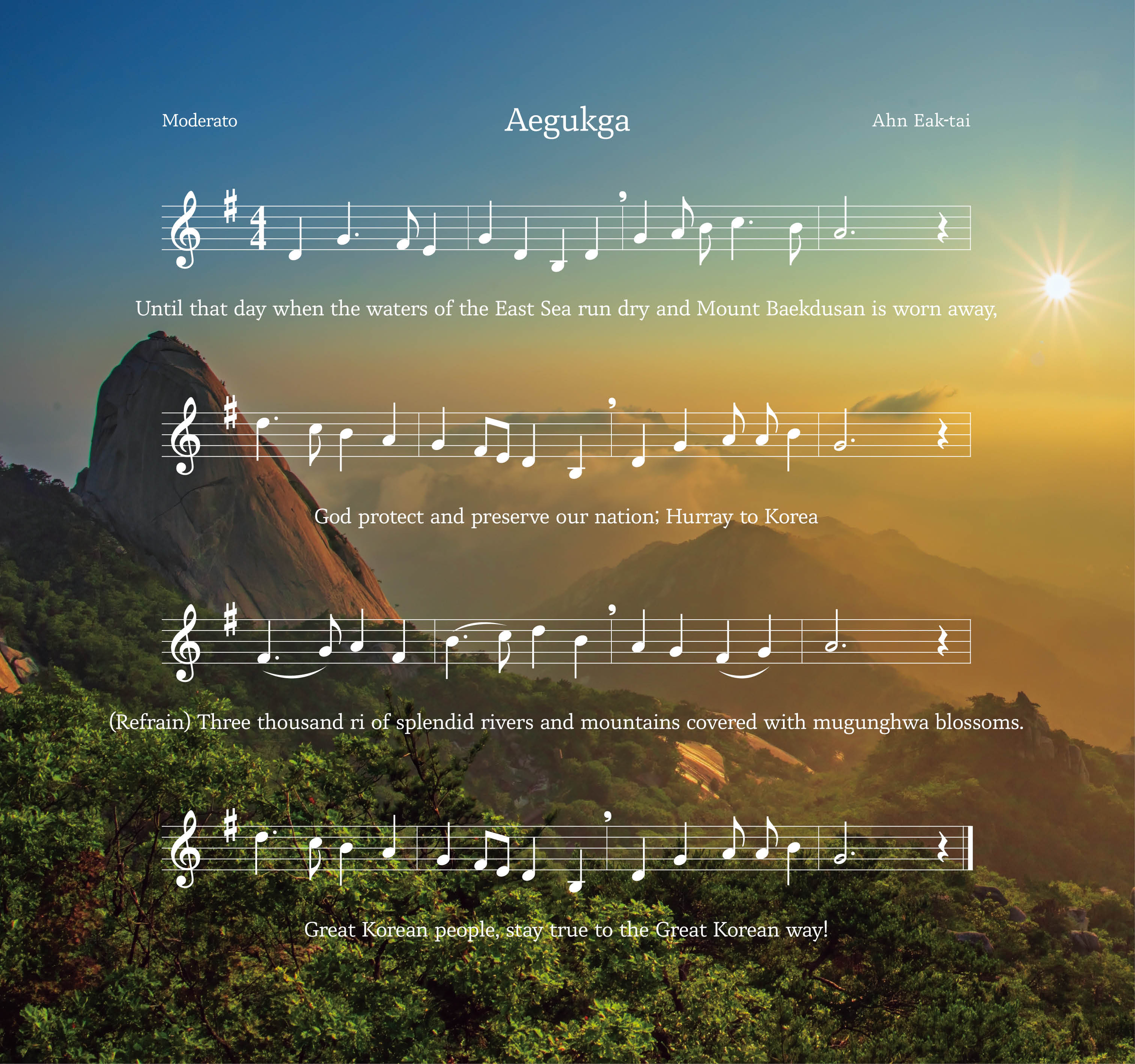
The “AegukgaLove for the Country,” is Korea’s national anthem. Its lyrics were written in the early 20th century by various patriotic figures, and the melody was composed in 1935 by Ahn Eaktai. The anthem was officially adopted in 1948 with the founding of the Republic of Korea and has been performed ever since on national holidays and at official events.
Korea’s Political System
The Republic of Korea is a democratic republic governed by the principle of separation of powers among the legislative, executive, and judicial branches. Korea operates under a presidential system. The president serves as both head of state and head of government, elected through direct popular vote for a single, non-renewable five-year term.
PDF Download